I love the rain, and not because it masks my tears, an idea overused in literature, films and music, with quotes attributed to Charlie Chaplin, and perhaps to Einstein by cheesy quotes on photos.
I would rather do my crying when it is needed instead of waiting for a summer rain to be able to walk dramatically and hide my pain with stoicism. If the opportunity of a walk in the rain on a hot summer day arises, I would rather enjoy its cooling effects and the soothing smell that follows.
The soil has an organic substance called geosmin, produced by blue-green algae and some soil bacteria. When water droplets fall on porous surfaces, this substance is displaced, along with oils that plants produce during a dry spell, in the form of air bubbles that burst above ground and release this earthly smell. Apparently we have the best detection system for it, better than the legendary shark radar for blood. When it rains, droplets are hitting dry dirt and displacing these particles, we pick them up and are delighted by the smell, called petrichor. We can detect geosmin at 4 parts per trillion, an ability observed in animals as well.
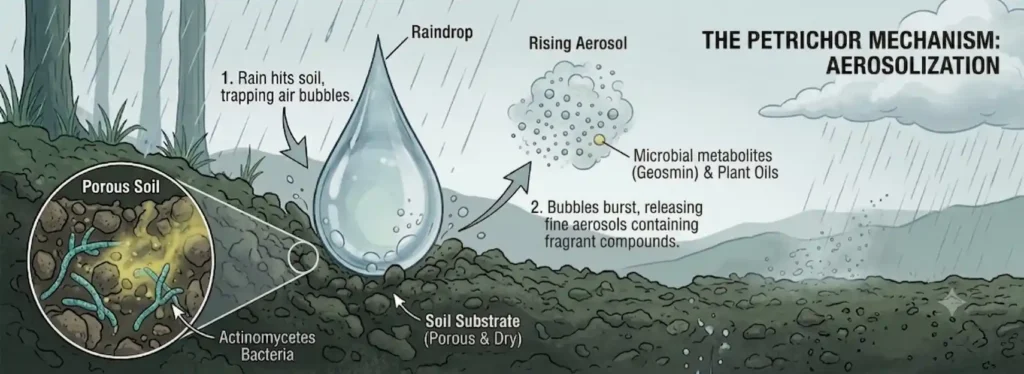
This is a clumsy summary of a few studies and experiments regarding the smell of rain, topped with the most agreed upon explanation: it helped our ancestors and wild animals detect vital water sources in times of need. Human life as we know it doesn’t necessarily make a good use of this ability, as water can be easily located by turning a tap on or by simply purchasing bottled water. Nevertheless, petrichor triggers visceral feelings of comfort, and they can be replicated indoors.
As I learned to leave my plants to dry a bit before watering, I mean the top layer not the entire container, watering them can displace the same particles responsible for rain generated petrichor. Just like I don’t need to wait for rain to cry, I don’t need to wait for rain for petrichor. I can make my own and be delighted by the tedious task of making loads of trips from the tap to my plants with my little watering can.
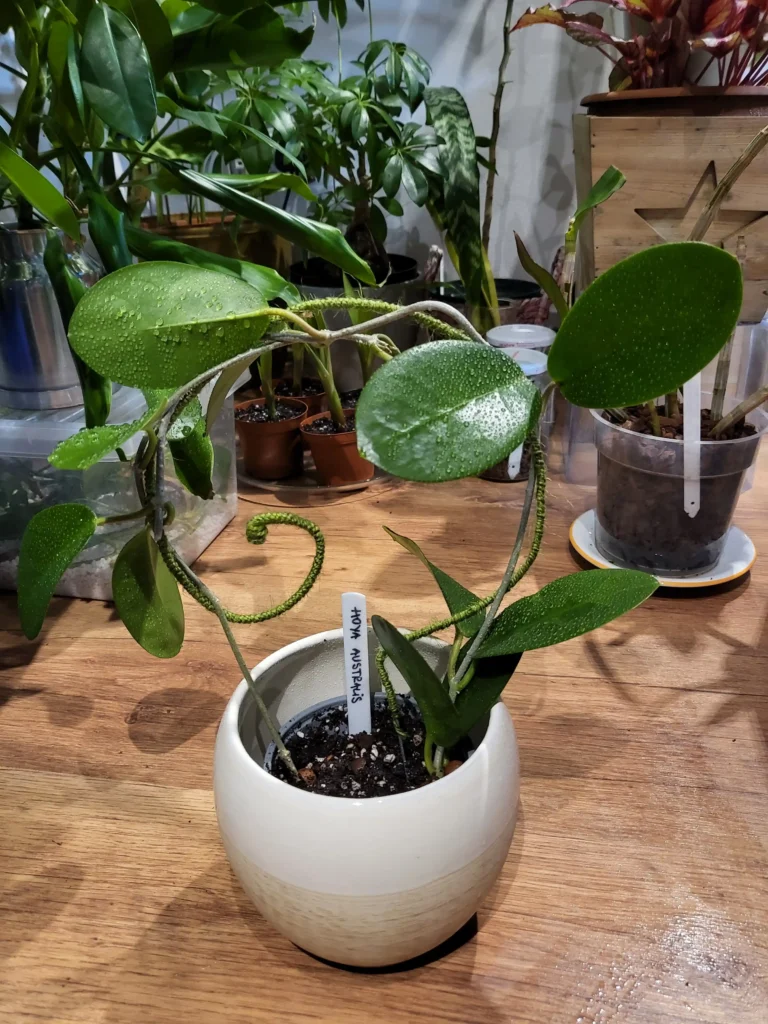
Since we got to houseplant watering, I would really like to emphasise how silly I find watering schedules. Your Monstera doesn’t absorb water just because it’s Friday. Checking if a plant needs to be watered is way better than sticking to a strict watering schedule. If the temperatures are higher, the soil dries faster and the plant needs more water. High humidity? Plants need less water. The moisture retention of the substrate makes a difference – if you keep a philodendron in the nursery potting mix it came with, compared to replacing it with a chunky mix that would keep it happy, the watering frequency changes. And then there is the size of the pot, how much of that space is filled with roots. There are so many variables, that a rigid watering schedule simply cannot suffice.
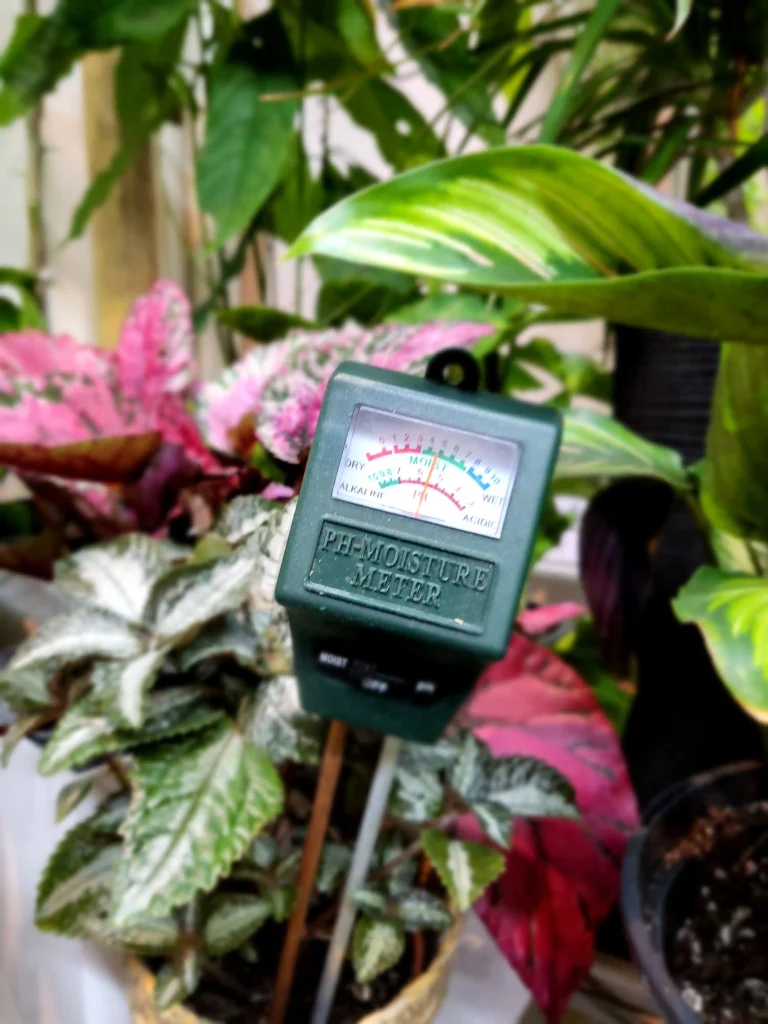
There are simple ways of checking. Lift the pots to compare weights between a freshly watered plant and the same plant dry. Or check with a wooden stick the soil, if it comes out clean, the soil is dry. There are also moisture meters that work similar to the stick method, except they have an indicator of humidity level in the substrate. Use transparent pots and check the substrate and the roots.
Of course, there is the matter of over-watering, responsible for so many unnecessary plant loss. Some say over-watering is the main cause of death among houseplants. There is a rule here: except aquatic plants, no other plant is thriving by sitting in water. In combination with inappropriate substrate, this causes root suffocation and rot. It is easier for a plant to recover from a dry spell than root rot. Naturally, a dry spell followed by over-watering is a death sentence.
So what I am confidently saying is to drop rigid watering schedules and check each plant before watering. One might even get to the point of understanding something is wrong with a plant by the change in soil smell alone. I must add a warning, this can get addictive. Took me years to reduce the hovering over plants excessively, although my solution to this was to increase my collection.
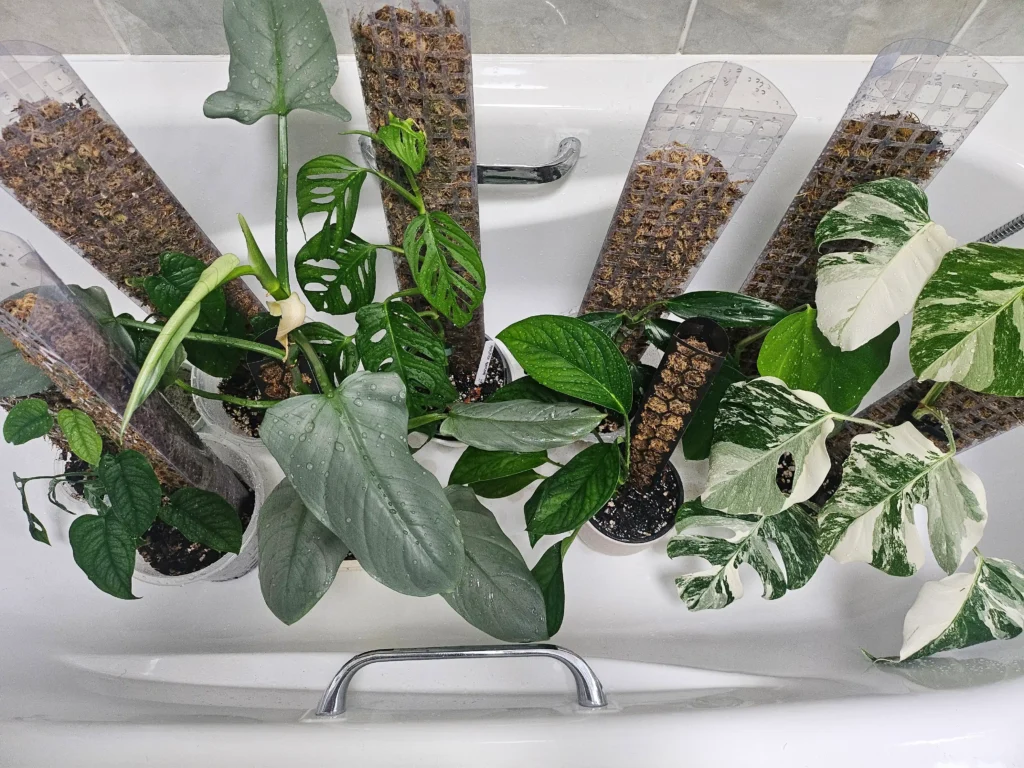
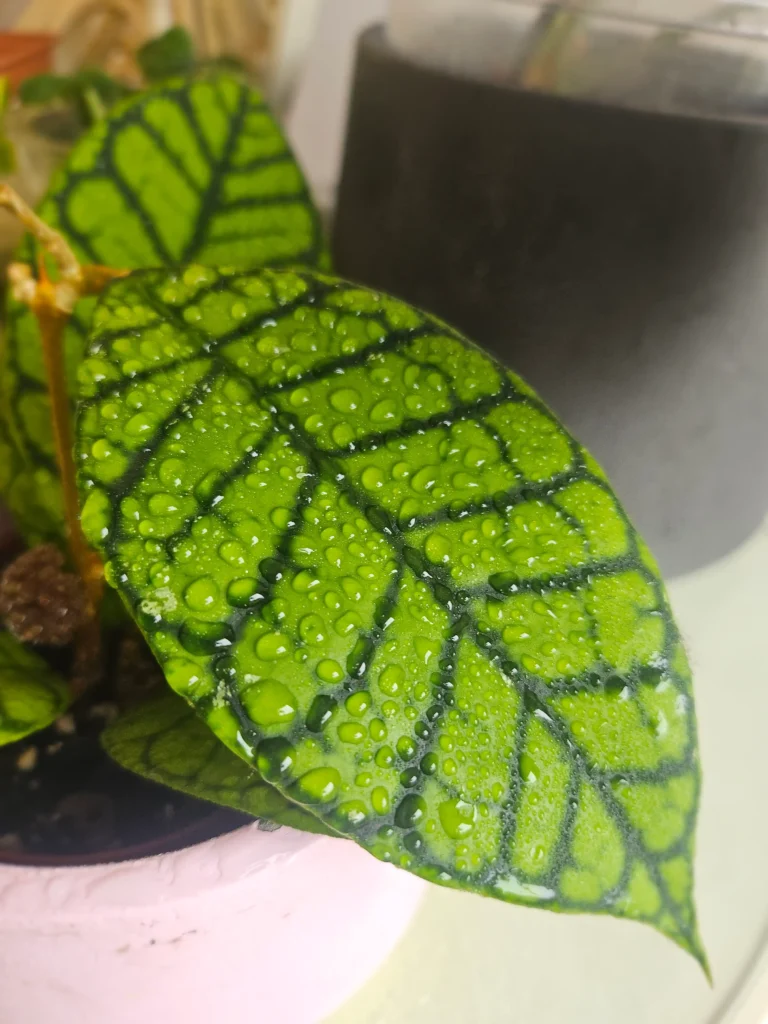
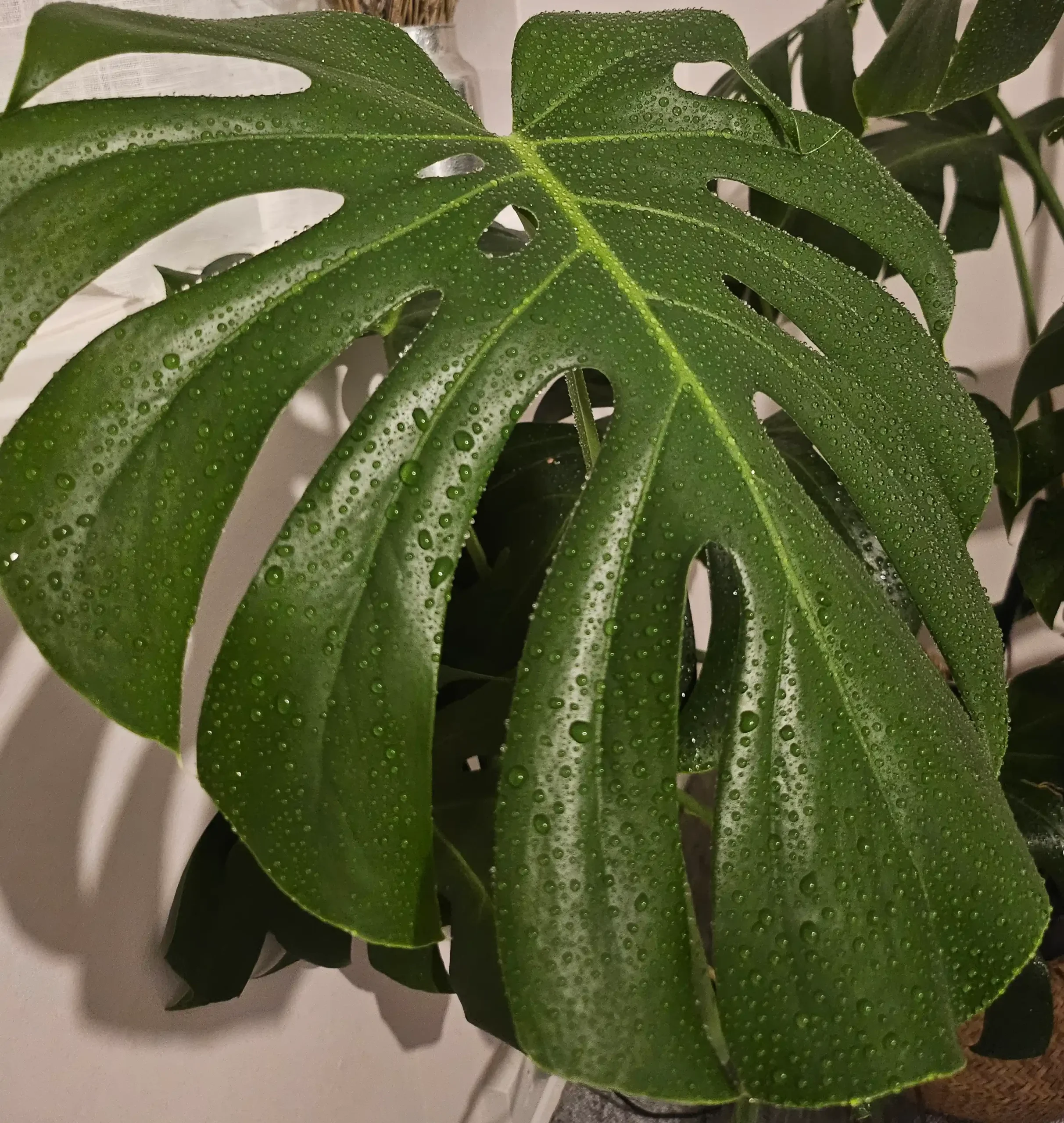
My houseplants enjoy a simulated rain, too. In summer I take them outside in a shady area and soak them, let the leaves dry and put them back inside before any of the local fauna gets the news about new feeding grounds. In winter, I take them in the shower for the same treatment. The part about letting the leaves dry is important, because I don’t have fans around my plants, and if water sits on leaves for too long, becomes a breeding ground for fungus. This is the reason I rarely mist my plants. I only spray them with water if it’s a hot day. Although pleasant and refreshing for me – they look great with water droplets on their leaves, the plants don’t benefit much from the short burst of humidity, and the risk of fungus outweighs my general feeling of freshness.
In conclusion, put some thought into plant watering – it’s good for mental health, and certainly it’s good for plants.