I made kokedama in the past, but they didn’t have a very long and happy life, as the maintenance is a bit annoying. Although they look great on Pintrest, as mine looked after I made it, the soil and moss dries quickly and keeping it at decent moisture levels is not the most pleasant task: misting doesn’t work, unless is done a few times a day; soaking is the way, but that involves removing it from the display to water it and waiting to stop dripping before it’s put back.
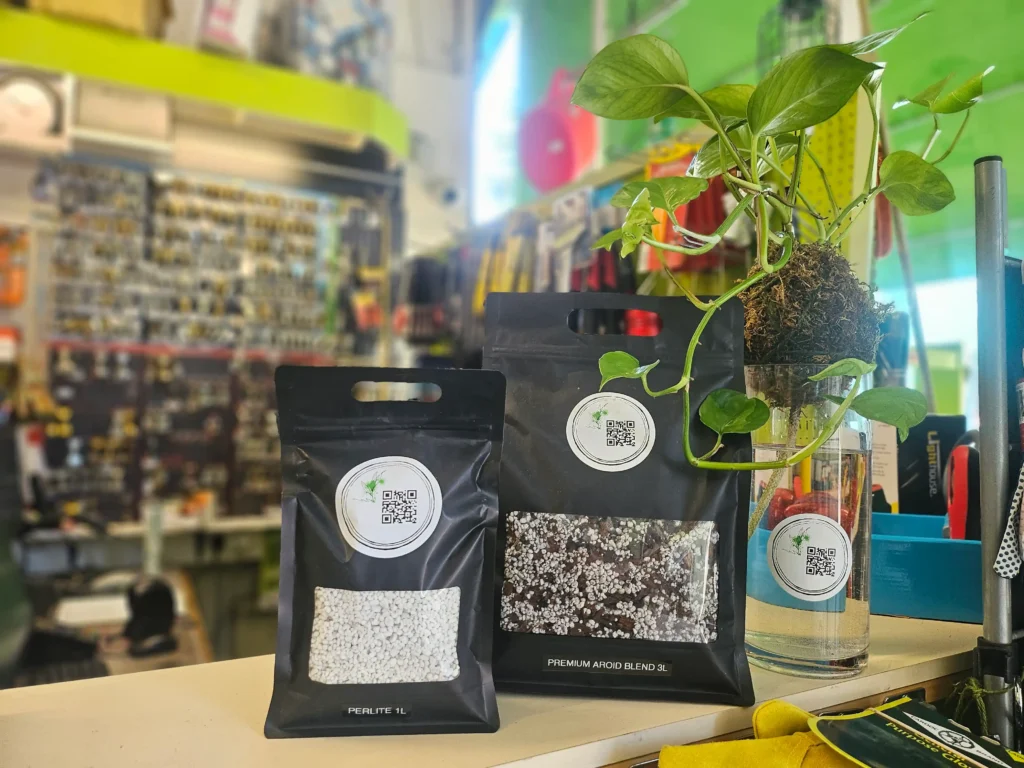
Of course, coming up with an easy maintenance idea, got me back into the excitement for this Japanese way of displaying plants, and here is the self-watering kokedama. You can see the ones I made in the BBT shops in Brighton in August: at Tinkers & Brydens in Seven Dials, and Bedford Hardware, in Kemptown. If you want to win one, follow Green Monstera and BBT Facebook pages and wait until the beginning of September, when the winners are being announced. You must be local enough to be able to pick them up from the shops.
Otherwise, here is a step by step guide to make one.
First of all, I used:
- Epipremnum Global Green plants,
- my custom made aroid blend (you can find it at Tinkers Hardware),
- a bit of cotton rope,
- sphagnum moss,
- garden twine and
- a transparent container to hold the water.
Epipremnums are aroid plants, and their roots need chunky soil to be able to get some oxygen. My substrate blend has worm castings, so additional fertiliser is not necessary for a long time. The whole maintenance process is reduced to just topping up the container, and perhaps pruning the vines if they get too long – a perfect opportunity for propagation, as they easily root in water.
I took the plants from their pots and removed as much soil as I could without disturbing the roots too much. Next, I tangled between the roots one end of the rope, in which I tied a node. wrapped their roots in soaked aroid blend in the shape of a sphere, and covered it in generous amounts of damp sphagnum moss. I used green garden twine to secure the moss and substrate, cleaned the mess from the moss and leaves and placed it in a container with water.
The whole thing took about 10 minutes, and if my explanations are not crystal clear, I recorded the process as well. You can check the video on my TikTok account.
I would be delighted to see your own kokedama. Anyway, if you’re unsure of the process, let me know if you have any questions or need any support in creating one.